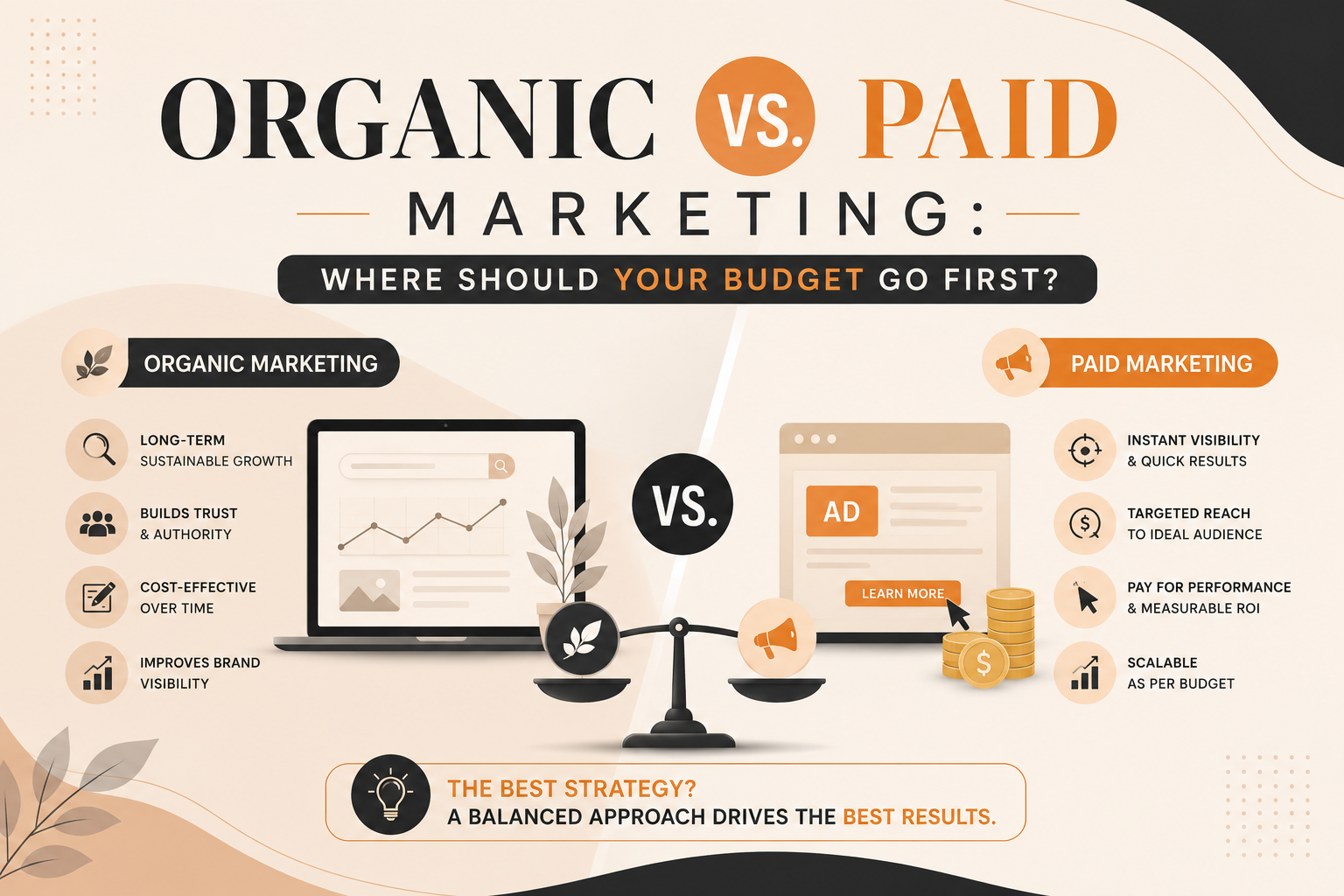
If you're running a small or mid-sized business, you've probably faced this exact question: should your next marketing dollar go toward SEO and content, or toward Google and Meta ads? It's one of the most common questions we hear from clients trying to figure out organic vs paid marketing for small business budgets — and the honest answer is that it depends on your timeline, your industry, and how much runway you have.
In this guide, we'll break down how organic and paid marketing actually work, compare them side by side, and give you a practical framework for deciding where to put your budget first — and when to combine both for maximum ROI.
What Is Organic Marketing?
Organic marketing refers to traffic and visibility you earn without directly paying for placement — think SEO, blog content, social media posts, and Google Business Profile optimization. It's built through consistent effort over time rather than ad spend, which is why many business owners weighing organic marketing vs paid advertising budget decisions see it as the "long game" channel.
Pros of Organic Marketing
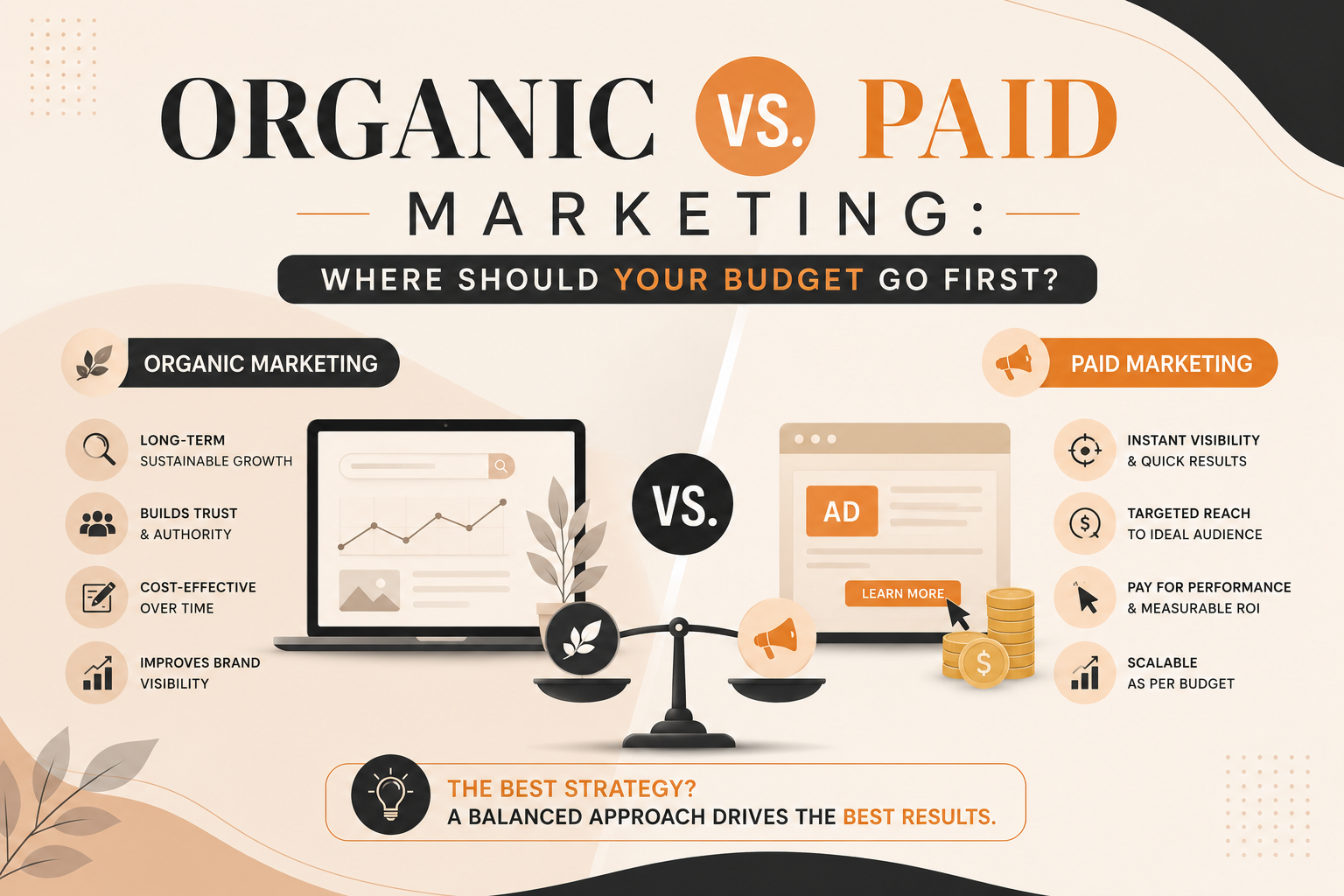
• Lower long-term cost per lead once rankings are established
• Builds trust and authority — users tend to trust earned results more than ads
• Keeps generating traffic even when you're not actively spending
Cons of Organic Marketing
• Takes time to show results, typically 3 to 6 months or longer
• Requires consistent content and SEO investment to maintain rankings
• No guaranteed ranking position, even with strong effort
What Is Paid Marketing?
Paid marketing covers channels like Google Ads, Meta Ads, and other pay-per-click platforms where you pay for immediate visibility. This is often the first question people ask when comparing channels: is SEO better than Google Ads? The truth is they solve different problems — paid ads buy you speed, while SEO builds a lasting asset.
Pros of Paid Marketing
• Immediate visibility and traffic, often within hours of launching
• Highly measurable — you can track cost per click, cost per lead, and ROI precisely
• Great for testing offers, messaging, and new markets quickly
Cons of Paid Marketing
• Traffic stops the moment your budget stops
• Costs can climb quickly in competitive industries
• Requires ongoing management and optimization to stay efficient
Organic vs. Paid Marketing: Key Differences at a Glance
Here's a quick side-by-side comparison to help visualize the trade-offs:
|
Factor |
Organic Marketing |
Paid Marketing |
|
Time to results |
3–6+ months |
Immediate |
|
Cost structure |
Upfront/ongoing content investment |
Pay-per-click, ongoing |
|
Longevity |
Long-term, compounding |
Stops when spend stops |
|
Trust/credibility |
Higher (earned placement) |
Lower (labeled "Ad") |
|
Best for |
Long-term brand building |
Fast, measurable results |
Should I Do SEO or Paid Ads First?
If you need leads fast and have budget to spend, start with paid ads. If you have more time than money and want to build a long-term, sustainable growth channel, start with SEO. Most established businesses eventually run both together, but your starting point should match your most urgent business need.
When to Prioritize Paid Marketing First
• You're a new business that needs leads or sales right away
• You're testing a new market, offer, or landing page
• You have budget available but haven't built organic traffic yet
When to Prioritize Organic Marketing First
• You have 12+ months of runway before needing strong ROI
• Paid ad space in your industry is highly competitive or expensive
• You want to build a durable brand asset that keeps paying off
How to Allocate Your Marketing Budget Between Organic and Paid
There's no single formula that works for every business, but here's a general framework based on business stage. These are starting benchmarks, not fixed rules — your ideal split depends on your industry, competition, and goals.
Example Budget Scenarios
• New business ($2,500–$5,000/month): Lean more heavily toward paid ads for immediate visibility while building organic content in the background
• Growing business ($5,000–$10,000/month): Move toward a more balanced split as organic traffic starts to gain traction
• Established business ($10,000+/month): Shift more budget into SEO and content, using paid ads to fill gaps and test new opportunities
Why the Best Strategy Combines Both
Organic and paid marketing work best as partners, not competitors. Paid ads deliver short-term wins and fast data on what messaging converts. Organic content turns that same data into long-term, compounding traffic. Many businesses use paid ad performance data to guide their content strategy, and use organic content to retarget and nurture paid traffic that didn't convert right away.
How Yummy Marketings Can Help You Decide
At Yummy Marketings, we help businesses build the right mix of SEO, paid ads, and content strategy based on your specific budget, industry, and growth stage — not a one-size-fits-all template. Whether you need a fast lead-generation push through AI-powered ad campaigns or a long-term SEO foundation, our team builds a plan around your goals.
Ready to find out where your next marketing dollar should go? Request a free growth audit and we'll map out a custom strategy for your business.
Frequently Asked Questions
Is organic marketing cheaper than paid marketing?
Organic marketing has lower direct costs over time but requires upfront investment in content and SEO work. Paid marketing has immediate but ongoing costs that stop producing traffic once spend stops.
How long does organic marketing take to show results?
Most businesses start seeing meaningful organic traffic growth within 3 to 6 months, with stronger results typically building over 6 to 12 months depending on competition and consistency.
Can I do paid ads without SEO?
Yes, but it's not ideal long-term. Paid ads without SEO means you lose all visibility the moment you stop spending, whereas SEO continues generating traffic even without ongoing ad spend.
What percentage of my marketing budget should go to paid ads?
This varies by business stage, but many small businesses start with a 50/50 or 60/40 split favoring the channel that matches their most urgent need — visibility now versus long-term growth.
Should a new business focus on SEO or paid ads first?
New businesses often benefit from starting with paid ads for immediate visibility and leads, while building organic SEO in parallel as a long-term, sustainable growth channel.
Final Thoughts
The organic vs paid marketing debate isn't really about picking a winner — it's about sequencing your investment to match your business's stage and goals. Start with the channel that solves your most urgent problem, then build toward a strategy that uses both together for sustainable, compounding growth.
Not sure where your budget should go first? Get a free growth audit from Yummy Marketings and we'll build a custom roadmap for your business.
Comments