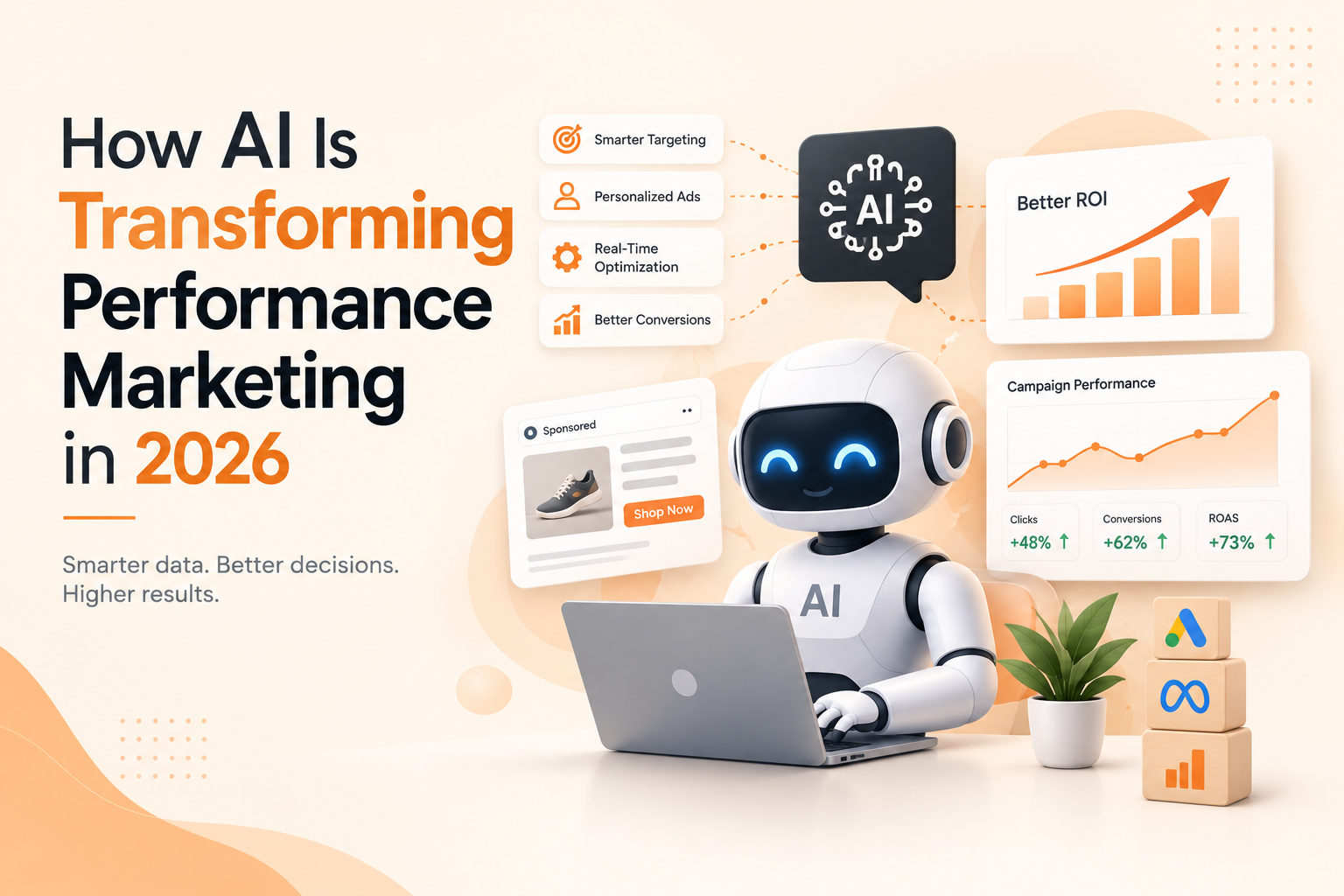
Marketing teams that used artificial intelligence to manage ad campaigns in 2025 reported significantly lower customer acquisition costs than teams relying on manual optimization alone. That gap is only widening in 2026. AI is no longer a “nice-to-have” for performance marketers — it has become the engine behind targeting, bidding, personalization, and real-time decision-making.
In this guide, we’ll break down exactly how AI in performance marketing is reshaping the industry, the tools driving results right now, the challenges businesses need to watch for, and what the future holds for brands that want to stay ahead of the curve.
What Is AI-Driven Performance Marketing?
AI-driven performance marketing uses machine learning and automation to plan, launch, optimize, and measure marketing campaigns based on measurable outcomes — clicks, leads, sales, or return on ad spend (ROAS). Instead of marketers manually adjusting bids or guessing which audience will convert, AI systems analyze massive datasets in real time and make those decisions automatically.
How It Differs From Traditional Performance Marketing
● Traditional marketing relies on manual A/B testing; AI runs thousands of micro-tests simultaneously.
● Traditional targeting uses static audience segments; AI builds dynamic, constantly-updating segments.
● Traditional reporting is retrospective; AI-driven reporting is predictive and prescriptive.
Why 2026 Is a Turning Point for AI Adoption in Marketing
Rising ad costs, tightening privacy regulations, and the phase-out of third-party cookies have pushed marketers toward first-party data and predictive modeling. AI is now the most practical way to make sense of fragmented data while still delivering personalized experiences at scale.
Top Ways AI Is Transforming Performance Marketing
1. Predictive Analytics and Customer Behavior Forecasting
AI models analyze historical and real-time data to forecast which users are most likely to convert, allowing marketers to allocate budget toward high-intent audiences before competitors do.
2. AI-Powered Ad Targeting and Audience Segmentation
Machine learning identifies patterns across thousands of data points — browsing behavior, purchase history, engagement signals — to build audience segments far more precise than manual demographic targeting.
3. Automated Bid Management and Budget Optimization
AI bidding algorithms adjust bids in real time based on the likelihood of conversion, device, time of day, and competitive landscape, reducing wasted spend and improving ROAS.
4. Dynamic Creative Optimization (DCO) for Ads
AI tests multiple headlines, images, and calls-to-action simultaneously, automatically serving the best-performing combination to each audience segment.
5. Chatbots and AI-Driven Customer Journeys
Conversational AI now guides prospects through personalized journeys, answering questions and nudging leads toward conversion without human intervention.
6. Real-Time Campaign Performance Adjustments
Rather than waiting for weekly reports, AI systems flag underperforming campaigns instantly and reallocate budget toward what’s working.
Benefits of Using AI in Performance Marketing
● Higher ROAS (Return on Ad Spend) through smarter budget allocation
● Reduced Customer Acquisition Cost (CAC) by minimizing wasted impressions
● Faster decision-making with real-time data instead of weekly or monthly reviews
● Improved personalization at scale across every customer touchpoint
Best AI Marketing Tools for Performance Campaigns in 2026
AI Tools for PPC and Paid Ads
Platforms with built-in AI bidding and audience prediction now handle the bulk of bid management for search and social ad campaigns, freeing strategists to focus on creative and offer testing.
AI Tools for SEO and Content Optimization
AI-assisted content tools help identify keyword gaps, optimize on-page structure, and predict which topics are most likely to rank based on current search intent trends.
AI Tools for Analytics and Attribution
Modern attribution platforms use machine learning to connect touchpoints across channels, giving a clearer picture of which campaigns actually drive revenue — not just clicks.
Challenges of Implementing AI in Performance Marketing
Data Privacy and Compliance Concerns
As AI systems rely on customer data, businesses must ensure compliance with regulations like the CCPA and emerging US state privacy laws, along with transparent data practices.
Balancing Automation With Human Strategy
AI can optimize execution, but brand voice, creative direction, and long-term strategy still require human judgment. The most effective teams treat AI as a co-pilot, not a replacement.
Common Mistakes Businesses Make With AI Marketing
● Turning on automation without clean, reliable data feeding the system
● Expecting instant results before AI models have enough data to learn from
● Ignoring human oversight on creative and brand messaging
The Future of Performance Marketing With AI
Predictions for 2027 and Beyond
Expect deeper integration between AI and first-party data platforms, more autonomous campaign management, and AI-generated creative that’s indistinguishable from human-made assets.
How Businesses Can Stay Ahead of the Curve
Brands that invest now in clean data infrastructure and AI-literate marketing teams will have a significant head start as automation becomes the industry standard rather than the exception.
How Our Agency Uses AI to Drive Performance Marketing Results
[Add 2–3 sentences here about your agency’s specific AI-driven approach, tools, or case study results. Link this section to your Services page for internal linking value.]
Frequently Asked Questions
How is AI used in performance marketing?
AI is used in performance marketing to automate ad targeting, optimize bidding strategies, personalize content, and analyze customer data in real time to improve campaign ROI.
Will AI replace performance marketers?
No — AI automates repetitive tasks like bidding and data analysis, but human strategists are still essential for creative direction, brand voice, and interpreting AI insights.
What are the best AI tools for performance marketing in 2026?
Popular AI marketing tools in 2026 include platforms for predictive analytics, automated ad optimization, AI copywriting, and real-time bid management. [Insert the specific tools your agency recommends or uses.]
How does AI improve ROAS in digital marketing?
AI improves ROAS by analyzing large datasets to identify high-converting audiences, adjusting bids in real time, and reducing wasted ad spend on underperforming segments.
Is AI marketing expensive for small businesses?
Not necessarily — many AI marketing tools now offer scalable pricing, and agencies can implement AI-driven strategies cost-effectively depending on business size and goals.
Comments